




In the ever-evolving world of journalism, we find solace in trends—those fleeting patterns that help us make sense of an industry otherwise brimming with unpredictability. In entertainment, these trends are often as fascinating as they are bewildering. Who could forget the era when Hollywood decided we needed not one, but two films about volcanoes and a pair of thrillers centered on deadly asteroids? Television, too, has its own peculiarities, such as the fall of 1994 when NBC pitted "ER," a gripping drama set in a Chicago hospital, against CBS’ "Chicago Hope"—another medical drama, also set in Chicago. Yet, despite this seemingly chaotic scheduling, "ER" emerged victorious during Thursday nights, while "Chicago Hope" continued to thrive elsewhere.
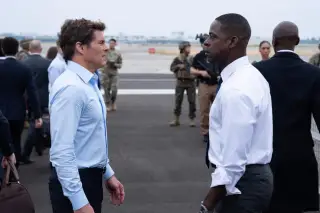
Trends, it seems, are the threads that weave together the fabric of our understanding of this business. They offer glimpses into the cultural pulse at any given moment. As we look ahead to the 2024-2025 Emmy season, one trend rises above the rest: the White House. In a world where Washington D.C. continues to serve as a backdrop for real-life drama, television has embraced the allure of D.C.-set narratives with fervor. These shows, however, stray far from the idealized vision of presidential administration once depicted in "The West Wing." Instead, they lean into darker, more sinister tones—though perhaps not as terrifying as the reality unfolding before us. Netflix's "The Residence," a dark comedy about a murder within the walls of the White House, and "Zero Day," starring Robert DeNiro as a former president investigating an attack, highlight this shift. Hulu’s "Paradise," featuring Sterling K. Brown as a Secret Service agent unraveling the mystery behind the assassination of the President in a post-apocalyptic America, adds another layer to this narrative tapestry. Meanwhile, BET’s "Tyler Perry’s The Oval" offers a soapy take on the complexities of the presidency.
What do these stories reveal about our current unease with the political system? Perhaps, as democracy falters, we seek refuge in fictional presidents who can guide us through uncertain times. Speaking of "Paradise," it taps into several trends we've observed this year, including the portrayal of widowers—a theme explored in shows like "Shrinking," "Severance," and "American Primeval."
Here are some of the more unusual coincidences you may have noticed if you binge-watch TV as voraciously as we do here at Variety Awards HQ:
POST-APOCALYPTIC CITIES: Even in the aftermath of global catastrophe, life must go on. Apple TV ’s "Silo" envisions humanity surviving within a colossal underground structure with countless floors. "Paradise" imagines an idyllic town reminiscent of "The Truman Show," though built beneath the earth's surface. HBO’s "The Last of Us" showcases a barricaded section of Jackson, Wyoming, where electricity still flows and plans exist to keep zombies at bay—plans whose effectiveness remains questionable.
EXPENSIVE IBÉRICO HAM: Could this be the strangest trend of the year? Ibérico ham plays a pivotal role in two Hulu series: "Only Murders in the Building" and "How to Die Alone." Was someone over there feeling peckish but craving something luxurious?
SEVERED ARMS: Allow me to revise my previous statement. This, indeed, is the strangest trend of the year. Severed arms figure prominently in both Apple TV ’s "Bad Monkey" and Paramount ’s "Colin from Accounts." While "Colin" leans into comedy, "Bad Monkey" combines quirky drama with humor. In both instances, the creative minds behind these shows deemed a severed arm essential to their storytelling.
DANCING OPENS: Opening credit sequences have experienced a resurgence in the age of streaming, much to our delight. Taking it a step further, CBS’ "Georgie